A Saudi visa for UAE residents is an online eVisa. You apply through the GCC residency option on the official Saudi portal. The visa lasts one year, allows multiple entries, and lets you stay up to 90 days.
You need a UAE residence permit valid for at least three months and a passport valid for at least six months. Emirati citizens do not need this visa.
This guide covers every route a UAE resident can use: the GCC resident eVisa, Umrah, stopover, business and family visits, and driving in by road. Each fact is checked against official sources and dated.
Last verified: 8 October 2026. Reviewed again on 19 October 2026, with no rule or fee change found.
Quick Answer: Saudi Visa for UAE Residents
Who needs it: UAE residents who are not citizens of a GCC country
Visa type: Saudi eVisa through the GCC residency option
Validity: one year, multiple entry
Stay: up to 90 days (check the conditions on your visa)
UAE residence permit: valid for at least 3 months
Passport: valid for at least 6 months
Insurance: mandatory, added during the application
Most do. Whether you need one depends on your passport, not your UAE residence.
You are
Saudi visa needed?
What to do
Emirati citizen
No
Carry your passport or national ID
Citizen of another GCC country
No
Carry your passport or national ID
UAE resident of any other nationality
Yes
Apply for the Saudi eVisa through GCC residency
Tourist visiting the UAE
Depends on passport
Check the eligible country list on the portal
Why the Portal Lists 68 Countries but Not the UAE
The Saudi eVisa portal lists 68 eligible countries. The UAE is not on that list because the list names nationalities. A country of residence is a different thing.
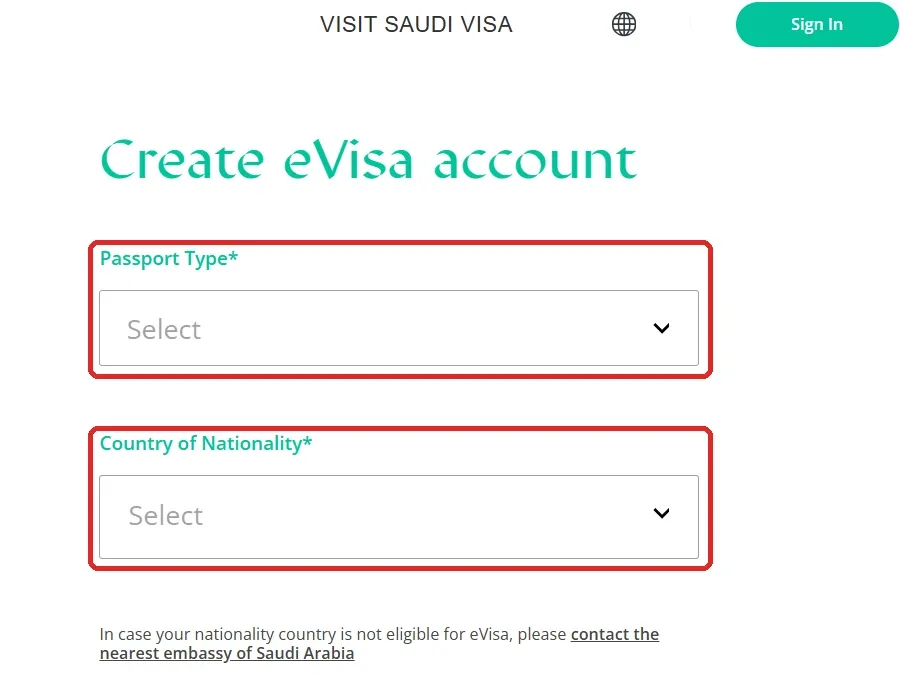
If your nationality is not listed, you can still apply as a UAE resident. Choose the GCC residency option on the application form. The portal then shows the visas open to you.
The Saudi Ministry of Tourism opened this option to all GCC residents, whatever their profession, in March 2023. Some websites still say your job must qualify. That is outdated.
Not every Gulf country has gone that far. Kuwait’s official visa platform still lists approved professions for GCC residents, which matters for anyone applying for a Kuwait tourist visa from the UAE.
Which Saudi Visa Can a UAE Resident Get?
Visa
Best for
Validity and stay
Sponsor needed?
GCC resident eVisa
Tourism, visiting friends or relatives (where tourist visa conditions allow), events, Umrah outside Hajj season
One year, multiple entry, up to 90 days
No
Tourist eVisa for listed nationalities
Passport holders of the 68 countries
One year, multiple entry, up to 90 days
No
Umrah visa through Nusuk
Pilgrims who want a dedicated Umrah visa
Set by the Ministry of Hajj and Umrah
No
Stopover visa
Short stop on a Saudia or flynas flight
Up to 96 hours
No
Business visit visa
Meetings and trade visits
Set by the Saudi mission
Yes, a Saudi company
Family visit visa
Visiting relatives who live in Saudi Arabia
Set by the Saudi mission
Yes, a relative in Saudi Arabia
Visa on arrival
Eligible holders of US, UK or Schengen visas, and some UK, US or EU permanent residents
Short stay
No
Most UAE residents need only the first row. The GCC resident eVisa is a tourist visa. It is not a Family Visit Visa or a business visa, and those two categories follow separate sponsorship rules.
GCC Resident eVisa
This is the main option for UAE residents. You apply online, pay by card, and receive the eVisa by email. Single entry options also exist, but the one year multiple entry visa suits most travellers.
The GCC resident eVisa can be valid for up to one year. The official portal gives a maximum stay of 90 days but does not say whether that is per visit or in total for the year, so check the conditions printed on your issued visa before you travel.
You can use it for:
Holidays and leisure
Visiting friends or relatives, where tourist visa conditions allow
Attending events
Umrah outside the Hajj season
You cannot use it for Hajj, work or study. Do not use the tourist eVisa as a substitute for a work visa or any other purpose specific visa.
Umrah on a Tourist eVisa
The eVisa allows Umrah outside the Hajj season. You do not need a separate Umrah visa. You do need a permit and appointment through the Nusuk platform before you enter the holy sites. The section on Umrah below explains the steps.
Stopover Visa
A stopover visa suits people flying through Saudi Arabia. It lasts up to 96 hours. Booking a Saudia or flynas flight with a Saudi stopover usually makes you eligible, and the visa is issued with your booking. The stopover visa may be issued without a visa fee, but administration or insurance charges can apply depending on your booking. Check the final amount during booking.
Business and Family Visit Visas
These need someone in Saudi Arabia to sponsor you. A Saudi company issues the invitation for business visits. A relative sends the invitation for family visits. Processing takes longer than the eVisa, so apply early.
Visa on Arrival
Visa on arrival covers only certain travellers. These include eligible holders of US, UK or Schengen visas, and some permanent residents of the UK, US or EU. The Visit Saudi eligibility checker decides your case. Most UAE residents do better applying online before they fly. You also avoid problems at check in.
Who Is Eligible for the Saudi Visa for UAE Residents?
You qualify when you meet all the rules below.
Your UAE residence permit is valid for at least 3 months from your travel date
Your passport is valid for at least 6 months from your entry date
You are 18 or older, or a parent or carer applies for you
You hold a residence permit, not just a visit visa
Example: if you plan to fly to Riyadh on 1 December and your UAE residence expires on 15 February, you have less than 3 months left on the travel date. Renew the residence first, then apply for the eVisa.
Your spouse, parents and children can apply too. So can domestic workers who travel with their sponsor. Each person needs a separate eVisa.
Children and Minors
Parents or carers apply for any traveller under 18. Each child needs their own passport and their own eVisa. A child does not travel on a parent’s visa.
Who Cannot Apply
You cannot apply if:
Your UAE residence is cancelled or expired
You are on a Saudi travel ban or blacklist
You applied recently and Saudi authorities refused you
How Much Is the Saudi Multiple Entry Visa for UAE Residents?
Here is what the official platform and the airline pages show.
Source
What it says
Date
Ministry of Foreign Affairs platform, as reported at launch
SAR 300 visa fee, plus the insurance premium
March 2023
flynas eVisa page
SAR 300 for GCC residents, including health insurance
Current page
Higher totals of around SAR 535 that you may see online are usually the tourist eVisa price for listed nationalities, not the GCC resident price.
Read the final amount on the portal screen before you pay. That screen is the only source that matters. It shows the visa fee and the insurance cost together.
What the Saudi Visa Fee for UAE Residents Includes
The government visa fee
Mandatory Saudi health insurance
Small digital service charges on some platforms
Insurance prices vary by plan. Visa fees are generally not refunded if an application is refused.
Portal Fee Versus Agent Fee
Some UAE agencies charge a service fee on top of the portal fee, sometimes far more than the visa itself. You can apply directly through the official portal without an agent, so an agent is a choice, not a need. If you hire one, ask for the portal fee and the service fee in writing.
Documents Required for a Saudi Visa for UAE Residents
Prepare these before you open the Saudi visa application form.
Passport: a clear scan of the photo page, valid for 6 months
UAE residence permit: a copy showing the expiry date, valid for 3 months
Photo: a recent colour photo on a white background
Payment card: a debit or credit card for the fee
Health insurance: you choose a plan during the application
The 2023 MOFA application also asked for details of countries visited in the last five years. Keep that list handy in case the form still asks.
The standard eVisa document list does not include a hotel booking. Airlines or border officers may still ask for proof of onward travel, so carry your booking.
Photo Tips
Use a plain white background
Keep your face fully visible
Do not use filters
Follow the upload limits shown on the portal
An unclear or incorrectly formatted photo can cause an application problem.
How to Apply for a Saudi Visa From the UAE, Step by Step
The portal steps may change slightly. The order below matches the official flow.
Open the official Saudi eVisa portal or the Ministry of Foreign Affairs platform.
Select Tourism as your visit type.
Select GCC residency and choose the UAE.
Click to view the visas open to you.
Choose single entry or the one year multiple entry visa.
Enter your details exactly as they appear in your passport.
Upload your passport page, UAE residence permit and photo.
Answer the health questions and pick a Saudi insurance plan.
Pay by card and save the transaction number.
Wait for the eVisa by email, then save and print a copy.
Save Your Reference Number
Write down your application number and payment receipt. You need them if the application stalls or you contact support.
How to Check Your Saudi Visa Status
Use the same portal where you applied. Enter your application number and passport number. Also check your spam folder, because the eVisa arrives by email.
Saudi eVisa Processing Time for UAE Residents
The flynas page says processing takes up to 7 working days. Many applicants get approval much sooner, sometimes within hours. Treat that as luck, not a promise.
Situation
What to expect
Clean application
Often within one or two days
Extra checks
Up to 7 working days
Manual review
Can take longer, with no official timeline
Apply at least two weeks before you travel. Give yourself more time before Ramadan, Eid and school holidays.
What “Sent to Embassy” Means
Some applications move to a manual review. The portal may show a status such as “Sent to Embassy”. A manual review status does not by itself mean refusal. Wait for the final status before you assume rejection, and do not submit a second application.
Can UAE Residents Perform Umrah on a Saudi eVisa?
Yes, outside the Hajj season. The Saudi eVisa portal lists Umrah among the allowed purposes. The eVisa does not allow Hajj.
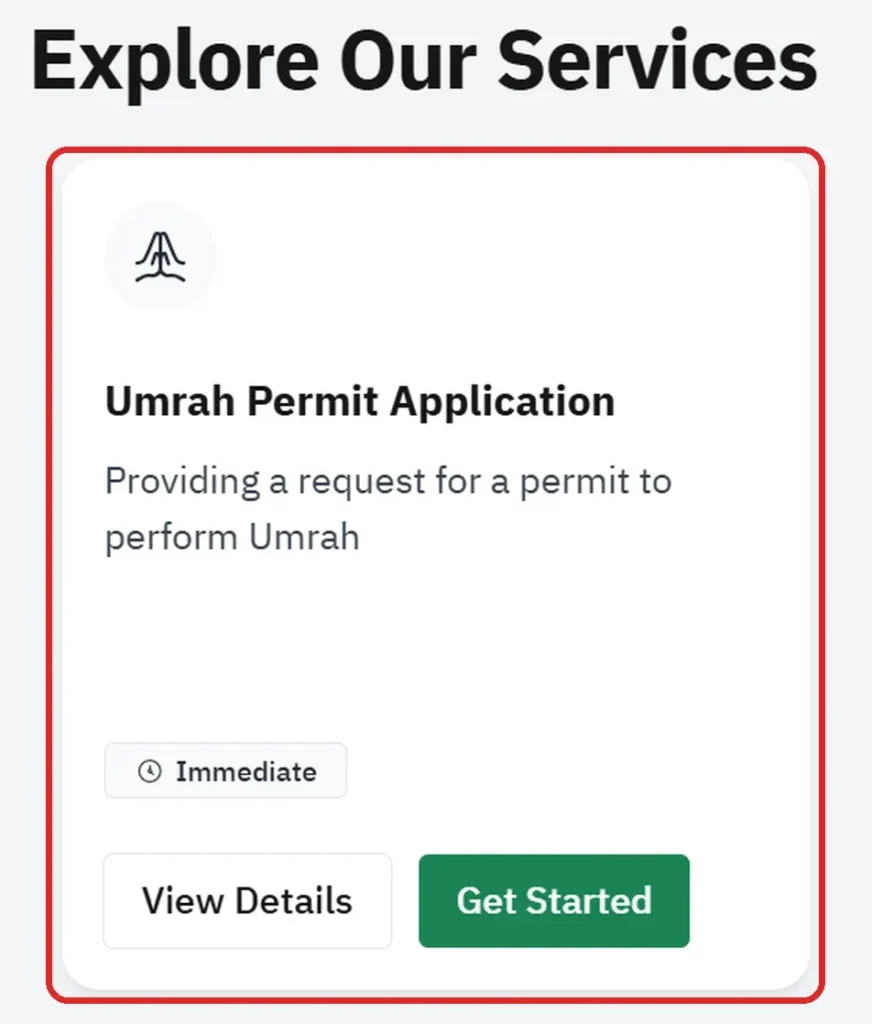
You also need a permit and visit appointment through the Nusuk platform before you enter the holy sites. Check the Ministry of Hajj and Umrah for current vaccine rules before you book.
The Hajj Season Restrictions
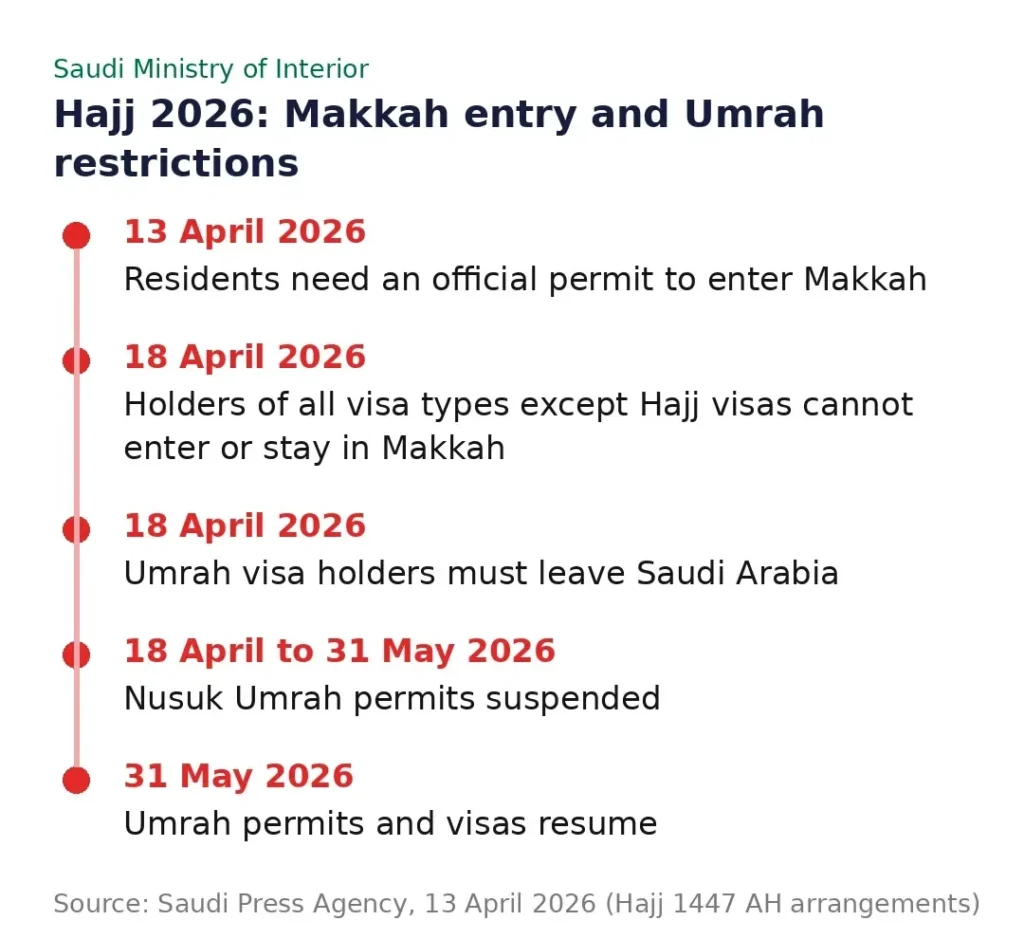
Saudi Arabia limits Makkah entry around Hajj. In 2026, the Ministry of Interior announced the following through the Saudi Press Agency on 13 April:
From 13 April 2026, residents needed an official permit to enter Makkah
From 18 April 2026, holders of all visa types could not enter or stay in Makkah, except Hajj visa holders
Umrah visa holders had to leave the Kingdom by 18 April 2026
Nusuk Umrah permits were suspended from 18 April to 31 May 2026
The Ministry said violators face the penalties set by law. Reports of the Hajj enforcement rules mention fines of up to SAR 20,000 and a 10 year entry ban for residents who perform Hajj without a permit. These apply to unauthorised Hajj, not to ordinary visits.
Plan Umrah trips well outside the Hajj window. Check Nusuk for the exact dates each year.
Umrah Season Dates
The Ministry of Hajj and Umrah announced these dates for the 1448 season:
Step
Date
Umrah visa issuance and entry resume
31 May 2026
Last visa issuance
9 March 2027
Last entry
23 March 2027
Last departure
7 April 2027
Dates can change. Confirm them on Nusuk before you pay for flights or hotels.
Driving to Saudi Arabia With a UAE Residence Visa
You can enter Saudi Arabia by road with your eVisa. The main route runs from Al Ghuwaifat in the UAE to Al Batha in Saudi Arabia. Get your eVisa before you reach the border.
What Border Officers Usually Ask For
Passport valid for 6 months
Saudi eVisa
Emirates ID
Original vehicle registration card (Mulkiya)
Insurance that covers Saudi Arabia
UAE motor insurance alone often does not cover Saudi Arabia. Buy a GCC policy or a temporary Saudi policy before you cross. Insurers sell both online and at the border.
Rental, Leased and Company Cars
Rental cars: the contract must allow Saudi travel. Many UAE companies do not allow it by default
Leased or financed cars: you may need written permission from the lender
Company cars: carry a stamped letter from your employer
Before You Drive
An expired Mulkiya will stop you at the border, so finish the registration renewal before the trip
Your stay is limited to 90 days, as stated on your visa. Plan your return before the limit ends.
Can You Extend a Saudi Visit Visa?
Do not count on an extension. Rules depend on the visa type, and Absher allows extensions only under set conditions, such as applying close to the expiry date while you are inside Saudi Arabia. Check Absher before you rely on any extension.
What Happens If You Overstay?
Fines can apply
Border officers can detain or refuse you
An entry ban can follow
Is There a Grace Period for Expired Visas?
Do not assume an expired Saudi visit visa gives you a general grace period. In June 2025, Saudi passport authorities announced a temporary 30 day exit window, and it was not a standing rule. Check Absher or the Saudi authorities for the current position before you rely on any grace period.
The GCC residency option is open to UAE residents of any nationality. That includes large expat groups such as Indian, Pakistani, Filipino, Egyptian and Bangladeshi residents. The Ministry of Tourism did not tie it to a job list.
Still, nationality can affect your experience:
Some applications go to manual review and take longer
Visa on arrival covers only eligible travellers, such as certain US, UK or Schengen visa holders
Umrah rules depend on the permit and season, not your passport
Choose GCC residency on the form, then read the visas the portal offers for your passport. That screen is the final answer for your nationality.
Why a Saudi eVisa Gets Rejected or Delayed
Reason
Fix
Name does not match the passport
Type your name exactly as printed
Poor photo
Use a plain, recent, unfiltered photo
Residence permit expiring soon
Renew first, then apply
Passport expiring within 6 months
Renew your passport
Wrong visa option selected
Choose GCC residency, not the option for your nationality
Apply only on official government platforms. Many lookalike sites exist.
Watch for these red flags:
The site charges far more than the portal fee
The agent asks for your card number or a one time code
The site promises approval in hours with a guarantee
The offer arrives by direct message
There is no link to a government platform
Official platforms end in visitsaudi.com, ksavisa.sa or mofa.gov.sa.
What Changed in 2026: Saudi Visa Updates for UAE Residents
Update
Status as of 19 October 2026
Hajj season Makkah restrictions
Announced by the Ministry of Interior on 13 April 2026
Umrah permits through Nusuk
Paused 18 April to 31 May, then resumed
Umrah season for 1448
Runs to 7 April 2027 for departures
GCC Grand Tours unified visa
Still not live. No start date confirmed
Exit window for expired visit visas
Temporary window announced June 2025. Do not assume it applies. Check Absher
Is the GCC Unified Tourist Visa Live?
No. The GCC Grand Tours visa would cover six countries with one permit. Reports in January 2026 pointed to a late 2026 launch, but no start date has been confirmed. Until then, you need a separate visa for each country.
Many residents pair Riyadh with Doha or Muscat on the same holiday. The Qatar visa rules and Oman visa rules also depend on your passport rather than your residence.
Common Mistakes When Applying for a Saudi Visa for UAE Residents
Applying with a residence permit that expires in under 3 months
Choosing the wrong visa option instead of GCC residency
Paying an agent without comparing the portal fee
Booking Umrah trips during the Hajj restriction window
Forgetting insurance when driving across
Applying one day before the flight
Assuming a tourist eVisa lets you work
Frequently Asked Questions About the Saudi Visa for UAE Residents
Do UAE residents need a visa for Saudi Arabia?
Yes, if you are not a GCC citizen. UAE residents of other nationalities apply for the Saudi eVisa through the GCC residency option. Emirati citizens do not need a visa.
How much is a Saudi visa for UAE residents?
The visa fee was SAR 300 when the Ministry of Foreign Affairs platform opened to GCC residents in 2023, plus insurance. The flynas page lists SAR 300 including insurance. Read the final price, including insurance, on the portal before you pay.
How long is a Saudi visa valid for UAE residents?
The multiple entry eVisa is valid for one year, with a maximum stay of 90 days. Check the conditions printed on your visa and count your days across all trips.
What documents do UAE residents need for a Saudi visa?
You need a passport valid for 6 months, a UAE residence permit valid for 3 months, a white background photo, a payment card and a Saudi insurance plan.
How long does a Saudi visa take for UAE residents?
Processing takes up to 7 working days, according to flynas. Many applications finish sooner. Apply at least two weeks before you travel.
Can I perform Umrah on a Saudi tourist visa from the UAE?
Yes, outside the Hajj season. You also need a Nusuk permit and appointment. The eVisa does not allow Hajj.
Can UAE residents drive to Saudi Arabia?
Yes. The main crossing is Al Ghuwaifat to Al Batha. Get your eVisa first, and carry your Emirates ID, Mulkiya and insurance that covers Saudi Arabia.
Is there a Saudi visa on arrival for UAE residents?
It is limited. Visa on arrival covers only eligible travellers, such as certain US, UK or Schengen visa holders. Check the Visit Saudi eligibility checker, and apply online if you do not qualify.
Can I extend a Saudi eVisa?
Do not count on it. Plan to leave before your 90 days end. Extension rules depend on the visa type and the conditions set on Absher.
Can children get a Saudi eVisa?
Yes. A parent or carer applies for each child under 18. Every child needs their own passport and visa.
Can I work in Saudi Arabia on a tourist eVisa?
No. The tourist eVisa covers tourism, visiting friends or relatives where allowed, events and Umrah. A work visa needs a Saudi sponsor.
What happens if my UAE residence expires while I am in Saudi Arabia?
You may face problems returning to the UAE. Renew before you travel using our UAE residence visa renewal guide.
Is a stopover visa free for UAE residents?
The stopover visa may be issued without a visa fee for eligible Saudia and flynas bookings. Administration or insurance charges can apply, and the stay is up to 96 hours. Check the final amount during booking.
Why was my Saudi visa application rejected?
Typical reasons are a name mismatch, a poor photo, an expiring residence permit or a wrong visa option. Fix the issue and apply again, as the fee is not refundable.
Can UAE residents get a Saudi multiple entry visa?
Yes. The GCC residency option offers a one year multiple entry eVisa with a maximum stay of 90 days. The flynas eVisa page lists SAR 300 for GCC residents including insurance, but the price on the official portal screen is the one you pay.
Can I apply for a Saudi visa from the UAE without an agent?
Yes. You apply online yourself on the official Saudi eVisa portal or the Ministry of Foreign Affairs platform, and pay by card. An agent only adds a service fee.
Conclusion: Your Saudi Visa for UAE Residents Checklist
The process is simple when you pick the right route. Apply for the GCC resident eVisa on an official platform. Check your residence and passport dates first. Read the fee on the screen before you pay.
Three habits save most people time and money:
Apply at least two weeks before you travel
Keep your application number and receipt
Avoid Makkah trips in the Hajj window unless you hold a Hajj permit
Planning a Saudi trip from the UAE? Check your UAE residence validity, passport validity, traffic fines and vehicle documents before you go. If you plan to drive, sort your Mulkiya, insurance and fines before the border. If your plans cover more Gulf countries, check each country’s visa rules before you book.
How We Verified This Guide
Last verified: 8 October 2026, reviewed 19 October 2026
Source order: Saudi government sources first, then airline pages from Saudia and flynas, then reputable news reports
Next review: before the 2027 Hajj season, or sooner if the fee or rules change
Fees and rules can change, so confirm every figure on the official portal before you pay
Anees is a UAE-based content creator, writer, and SEO professional with over 12 years of experience. Since 2014, he has published research-backed guides on UAE visas, labour laws, jobs, traffic fines, and government services, all verified against official sources. He is certified in SEO by HubSpot Academy and Digital Marketing by Google Digital Garage.
12+ Years ExperienceHubSpot Academy — SEOGoogle Digital Garage
Disclaimer: This information is for general guidance only, based on publicly available UAE laws and regulations. It does not constitute legal advice. Always verify with official UAE government sources or a qualified legal professional.




Your email will not be published. Comments are reviewed before appearing.